Source HEPA Cabin Filter with Clapboard for Hotels, Farms, and Shops
Compare 30 verified listings for HEPA Cabin Filter with Clapboard designed for hotels, garment shops, and food factories. Buyers can evaluate frame materials, efficiency ratings, and customization options from suppliers in Guangdong and Shandong.
Key considerations
Products List


Comprehensive Sourcing Guide
Strategic Sourcing Guide for HEPA Cabin Filters with Clapboard
Understanding the Technical Architecture of HEPA Cabin Filters
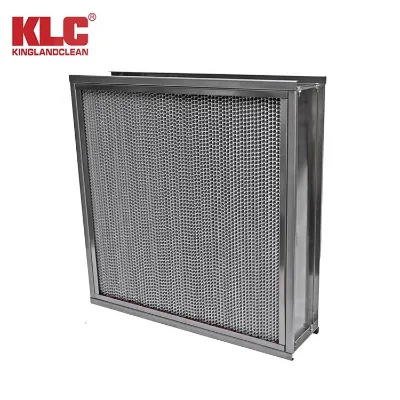
When sourcing a HEPA cabin filter with a clapboard, buyers must first distinguish between the structural frame and the internal filtration media. The product landscape for these components is defined by specific material compositions and construction methods that directly impact performance in critical environments. The core construction of these units is typically a panel filter design, which is engineered to maintain structural integrity under varying pressure differentials. The frame material is a critical variable; observed market data indicates availability in aluminum, galvanized steel, stainless steel, and wood. For applications requiring high corrosion resistance or strict hygiene standards, such as operating rooms or food processing facilities, stainless steel 316 or galvanized steel frames are often preferred over wood or standard aluminum.
The filtration media itself is predominantly composed of ultra-fine glass fiber or microfiber. This material selection is essential for achieving the high-efficiency ratings observed in the market, which range from 99.99% to 99.9995% at a particle size of 0.3 micrometers. The porosity of the media is tightly controlled, often cited at 0.3 micrometers, ensuring that the filter captures sub-micron particulates effectively. The sealant used to bond the media to the frame is another critical technical specification. High-quality units utilize a two-component polyurethane rubber sealant, which provides durability and prevents air bypass. Additionally, the gasket material, which ensures a tight seal within the cabin or ductwork, varies between endless gaskets, EVA, and neoprene, depending on the specific environmental conditions the filter will face.
The presence of a clapboard is a specific structural feature that buyers must verify. In the current supply market, models are available both with and without a clapboard. The clapboard serves as a protective or structural element, often used to reinforce the filter frame or to facilitate handling during installation. When evaluating a specific product listing, the buyer must confirm whether the "with Clapboard" or "without Clapboard" configuration matches their mechanical requirements. The dimensions of these filters are frequently customized to fit specific cabin or ductwork specifications, with standard model numbers like AF-H001 or High-efficiency filter 63063090 representing different size configurations. The maximum operating temperature for these units is generally rated up to 80°C, though some high-temperature variants may claim resistance up to 250°C to 300°C, requiring careful verification against the specific application's thermal profile.
Compliance, Certification, and Verification Protocols
In the B2B procurement of high-efficiency air filters, compliance and certification are paramount, yet the data landscape presents specific challenges regarding standard assertions. While industry knowledge often references standards such as ISO 29463 and EN 1822, the provided product facts do not explicitly confirm that every listed unit meets these specific international standards. Therefore, buyers must treat these standards as verification targets rather than guaranteed attributes of the supply. The primary efficiency metric provided is 99.99% to 99.9995% at 0.3μm, which aligns with the definition of HEPA and ULPA filtration grades. However, without explicit certification documentation, buyers should not assume compliance with ISO or EN standards based solely on the product title or efficiency claims.
Buyers must prioritize the verification of the "Filtration Grade" attribute. The market lists these products as HEPA Filters, ULPA Filters, or sometimes Pre Filters. It is crucial to distinguish between these grades, as a Pre Filter is designed for initial particle capture and does not offer the same level of filtration as a HEPA or ULPA unit. The product name "HEPA Air Filter" and the model designation "Hepa filter - KLC" suggest a high-efficiency product, but the "Filtration Grade" attribute also lists "Pre Filter" in some contexts, indicating a need for careful scrutiny of the specific item's technical data sheet. The efficiency class is noted as operating at room temperature up to 80°C, which serves as a baseline for thermal compliance.
Regarding certifications, the provided facts do not list specific third-party test results or certification bodies for the individual units. Instead, the focus should be on the supplier's ability to provide video outgoing-inspection. This feature allows the buyer to visually verify the construction, frame quality, and media integrity before shipment. The "Video outgoing-inspection: Provided" attribute is a significant quality assurance tool, enabling remote verification of the physical product. Buyers should request this video inspection as a mandatory step in the procurement process to ensure that the physical unit matches the claimed specifications regarding frame material, sealant application, and media density.
Cost Drivers and Economic Factors in Procurement
The pricing structure for HEPA cabin filters with clapboards is influenced by several key variables, including frame material, filtration grade, and customization requirements. The observed price range in the market spans from $4.5 to $450 USD, a wide disparity that reflects the diversity in product specifications. The lower end of this range likely corresponds to standard aluminum or galvanized frames with basic efficiency ratings, while the upper end reflects stainless steel construction, ULPA-grade media, and complex customization. The "Optional aluminum" dimension range of 120~292mm suggests that larger or more specialized frame sizes contribute to higher costs.
Minimum Order Quantity (MOQ) is another significant economic factor. The observed MOQ range is between 1 and 200 units. This flexibility allows buyers to source small quantities for pilot projects or testing, with a minimum of just one unit, while larger procurement needs can be met with bulk orders up to 200 units. The supply ability is noted as 10,000 pieces per month, indicating that the market has sufficient capacity to handle large-scale orders without significant bottlenecks. However, buyers should be aware that "Customized Size" and "Customized Case" packing options may incur additional costs or extended lead times, even if the base supply capacity is high.
Packaging details also play a role in the total cost of ownership. The standard packaging involves polywood or carton packing, which is designed to protect the filter during transit. For specialized shipments, "Customized Case" options are available, which may increase the unit price but reduce the risk of damage. The "Selling Units" are listed as single items, which simplifies the purchasing process for small orders but may require aggregation for bulk pricing negotiations. Buyers should also consider the "After-sales Service Provided," which includes an overseas service center. While the warranty is listed as "Unavailable" for the core product, the availability of overseas service centers suggests that maintenance and support are part of the value proposition, potentially reducing long-term operational costs.
Typical Applications and Industry Suitability
HEPA cabin filters with clapboards are designed for a broad spectrum of industrial and commercial applications, as evidenced by the extensive list of applicable industries. These include hotels, garment shops, building material shops, manufacturing plants, machinery repair shops, food and beverage factories, farms, restaurants, home use, retail stores, food shops, printing shops, construction works, energy and mining sectors, and food and beverage shops. The versatility of these filters is driven by their ability to maintain air quality in environments ranging from domestic settings to heavy industrial facilities.
In the context of operating rooms, which are explicitly mentioned in the product type "operating room hepa filter," the high efficiency of 99.99% to 99.9995% is critical for maintaining sterile environments. The construction of these filters, often involving stainless steel frames and polyurethane sealants, ensures they can withstand the rigorous cleaning and sterilization processes required in medical facilities. Similarly, in food and beverage factories, the filters help prevent contamination by capturing airborne particles, ensuring compliance with hygiene standards. The "Max.humidity" rating of 80% indicates that these units are suitable for environments with moderate to high humidity, which is common in food processing and agricultural settings.
For manufacturing plants and machinery repair shops, the durability of the aluminum or galvanized steel frames is essential. These environments often generate significant dust and particulate matter, requiring robust filtration systems. The "Clapboard" feature may be particularly useful in these settings, providing additional structural support for the filter frame during installation and maintenance. In the energy and mining sectors, where air quality can be compromised by fine particulates, the high-efficiency media ensures that sensitive equipment is protected from dust ingress. The "Home Use" application suggests that these filters are also adaptable for residential HVAC systems, offering a high level of air purification for domestic environments.
Supplier Evaluation and Quality Control Strategies
Evaluating suppliers for HEPA cabin filters requires a focus on specific attributes that indicate reliability and quality. The "Brand Name" KLC is a recurring identifier in the product data, but buyers should not rely on brand recognition alone. Instead, the focus should be on the supplier's ability to provide "Video outgoing-inspection," which serves as a tangible proof of product quality. This feature allows buyers to verify the physical construction of the filter, including the frame material, the integrity of the sealant, and the condition of the media.
The "Condition" of the product is listed as "New," which is a standard expectation but should be confirmed in the purchase agreement. The "Warranty of core components" is noted as "Not Available," which is a critical risk factor for buyers. This lack of warranty coverage means that buyers must rely heavily on the supplier's reputation and the quality control measures they employ. The "After-sales Service Provided" attribute, specifically the "Overseas service center available," is a positive indicator of long-term support, even in the absence of a formal warranty. Buyers should verify the location and capabilities of these service centers to ensure they can provide timely assistance if issues arise.
Quality control should also extend to the verification of the "Filtration Grade" and "Efficiency" claims. Since the efficiency is listed as 99.99%~99.9995%@0.3μm, buyers should request test reports or third-party verification to confirm these figures. The "Standard" attribute is listed as "Customized on demand" or "customized," which implies that the product may not adhere to a single universal standard. Buyers must define their specific requirements and ensure the supplier can meet them. The "Place of Origin" is primarily Guangdong, China, with some products originating from Shandong, China. Buyers should consider the logistics and lead times associated with these locations when planning their procurement strategy.
Long-Term Procurement and Operational Considerations
Long-term procurement of HEPA cabin filters involves considerations beyond the initial purchase price. The "Warranty" being "Unavailable" necessitates a proactive approach to maintenance and replacement planning. Buyers should establish a schedule for regular filter inspections and replacements to ensure continuous air quality. The "Max.temperature" and "Max.humidity" ratings are critical for determining the lifespan of the filter in specific environments. Operating a filter beyond its rated temperature or humidity limits can lead to premature failure, compromising the filtration efficiency and potentially damaging the HVAC system.
The "Customization" availability is a key factor for long-term procurement. As facility requirements change, the ability to order filters with customized dimensions and packing can ensure a perfect fit and optimal performance. The "Supply Ability" of 10,000 pieces per month provides confidence that the supplier can meet ongoing demand, but buyers should confirm lead times for customized orders. The "Packaging Details" of polywood or carton packing are designed for protection, but buyers should consider the environmental impact of packaging materials and explore sustainable options if available.
Finally, the "Core Components" of the filter, specifically the "Filter efficiency," are the heart of the product. Buyers should prioritize suppliers who demonstrate transparency in their manufacturing processes and quality control measures. The "Video outgoing-inspection" feature is a valuable tool for maintaining trust and ensuring that the product meets the buyer's expectations. By focusing on these long-term considerations, buyers can build a sustainable procurement strategy that ensures high air quality and operational efficiency for their facilities.
FAQs
What frame materials are available for HEPA Cabin Filter with Clapboard?
Frames are available in aluminum, galvanized steel, stainless steel, or wood. Stainless steel 316 and galvanized steel are preferred for high corrosion resistance in operating rooms and food factories.
How efficient is the filtration media in these units?
The filtration efficiency ranges from 99.99% to 99.9995% at 0.3 micrometers. This high performance is achieved using ultra-fine glass fiber or microfiber media suitable for cleanroom environments.
Can I order custom sizes for my specific cabin requirements?
Yes, customized sizes are available to fit specific cabin or ductwork specifications. Buyers can request tailored dimensions and packaging options like polywood or carton packing to match their needs.
What is the maximum operating temperature for these filters?
Standard units operate up to 80 degrees Celsius, while some variants resist temperatures between 250 and 300 degrees Celsius. Verify the specific temperature rating against your application profile before purchasing.
Does the product come with a warranty for core components?
The warranty for core components is not available for these units. Buyers should rely on the provided video outgoing-inspection service to verify construction quality before shipment instead of warranty coverage.
Which industries commonly use HEPA Cabin Filter with Clapboard?
These filters are used in hotels, food factories, operating rooms, and manufacturing plants. They are also suitable for home use, construction works, and energy sectors requiring high air purity.
What sealant and gasket materials are used in construction?
Sealants include two-component polyurethane rubber to prevent air bypass. Gaskets are available as endless gaskets, EVA, or neoprene depending on the environmental conditions and humidity levels of the installation.